
Online Gaming Laws in Pakistan: What Players Must Know
The world of digital entertainment has changed a lot in Pakistan. Today, millions of people play games on their phones and computers. But there is a lot of confusion about the legal side of things. Many players ask us: is it okay to play online games for money? Can the police arrest me for playing a fantasy cricket app? What is the actual status of online gaming laws in Pakistan?
These are fair questions. The truth is that the legal framework is complicated. Pakistan does not have one single law that covers all online gaming. Instead, the rules change depending on your province. Some provinces have brought in harsh new laws. Others have not updated their rules for decades. As someone who has followed this industry closely for years, I can tell you that the situation is confusing even for legal experts.
In this guide, I will break down everything you need to know. We will look at the actual laws, the difference between skill games and gambling, the penalties you could face, and practical ways to protect yourself. The goal is to give you clear and accurate information so you do not land in trouble.
Understanding Online Gaming Laws in Pakistan

To understand the legal position, you need to know the history. The main law that deals with gambling in Pakistan is the Prevention of Gambling Act, 1977. This is a federal law that was introduced during the time of the Pakistan People’s Party government under Zulfikar Ali Bhutto. Before 1977, gambling laws varied from state to state. This Act was meant to unify the rules across the country. It banned most forms of betting and gambling, including running a gaming house.
However, this law was written before the internet was invented. It talks about physical betting shops, racecourses, and card rooms. It does not mention online casinos, fantasy cricket, or mobile betting apps. This creates a big legal gap. Some legal scholars believe that the law should apply to online gambling too because the act of betting remains the same. Others argue that since the law only mentions physical premises, online platforms fall outside its scope.
In 2018, the government tried to modernise the rules. They introduced the Prevention of Gambling (Amendment) Bill, 2018. This bill proposed to expand the definition of gambling. It wanted to include “all forms of betting and gambling through electronic medium, internet or any other mode”. The bill also banned the sale, purchase, or transfer of lottery tickets. If this bill had become law, it would have given authorities real power to block online betting websites. But here is the problem: the bill was never passed. It lapsed when the National Assembly was dissolved. So today, we still rely on the old 1977 Act, plus some provincial rules that came later.
One more important point is the Constitution. Under the Constitution of Pakistan, law and order is mostly a provincial matter. The 18th Amendment, passed in 2010, gave provinces more power to make their own laws. This is why we now see different rules in Punjab compared to Sindh or Khyber Pakhtunkhwa.
Provincial Regulations and Enforcement
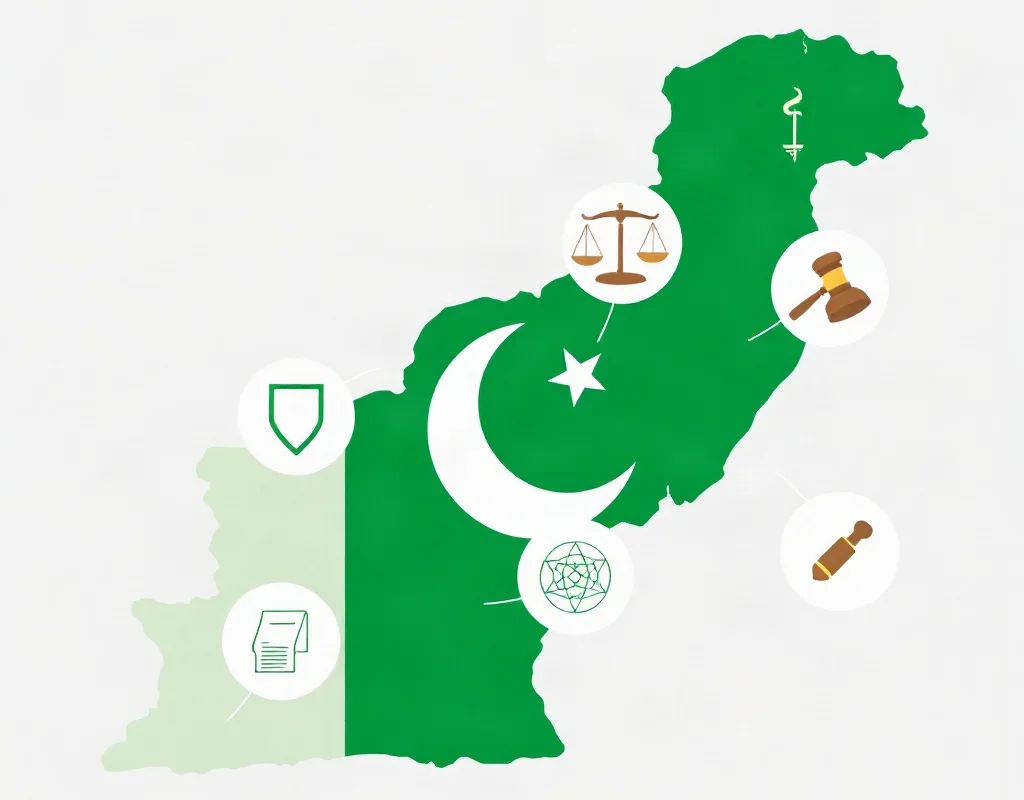
The most significant recent development happened in Punjab. In August 2023, the Punjab government passed the Punjab Prohibition of Gambling Act, 2023. This is the toughest law in the country regarding my topic of online gaming laws in Pakistan. The law was introduced mainly to stop the rise of online betting apps that had become very popular among young people.
Let me explain what this law says. It bans all forms of gambling, whether physical or online. It specifically prohibits the use of “electronic equipment, computer resource or any other technology” for gambling. The law also targets the facilitators. If you are a bank that processes payments for a betting site, you can be penalised. If you are an internet service provider that does not block a banned gambling site, you can also face fines.
The penalties are severe. For a first offence, the fine can go up to one million rupees. For repeat offences, the fine can rise to five million rupees. There is also a provision for seizing property connected to gambling. Let me give you an actual example. In late 2023, Punjab police conducted raids and arrested several people who were running online betting operations. The confiscation of mobile phones, computers, and cash was routine.
But enforcement has been uneven. Big international betting companies operate from abroad. They are hard to touch. What the authorities do instead is block their websites. The Pakistan Telecommunication Authority (PTA) maintains a list of banned gambling websites. As of my last count, hundreds of domains are blocked. But these sites keep creating new domains. It is like a game of cat and mouse.
In Sindh, the situation is different. The province still follows the older federal laws. There is no dedicated provincial gambling act for online platforms. However, the police do act when they receive complaints. In Karachi, there have been many raids on places where people gather to gamble online. Sindh police arrest people under the 1977 Act, using its existing provisions.
In Khyber Pakhtunkhwa and Balochistan, enforcement is mostly focused on physical gambling centres. Online activity is rarely tracked. This creates a patchwork system where the strictness of the law depends on your city and your luck.
Online Gaming vs. Online Gambling: The Gray Area
This is perhaps the most confusing part of the entire legal landscape. Where do you draw the line between a game of skill and gambling? The law says that “games of mere skill” are not gambling. This distinction matters because it affects how online gaming laws in Pakistan apply to you.
Let me give you a real-world example. In 2021, the Lahore High Court heard a case about a game called “Ludo Star” and similar money-based games. The petitioners argued that Ludo involves skill in rolling dice? Actually no, Ludo involves more luck. But other strategy games are pure skill. The court issued an order that skill-based games should not be treated as gambling.
The leading court precedent comes from a much older case, Mirza Ali Akbar Khan v. The Crown (1937). The court ruled that if a game depends primarily on skill, it is not gambling. For example, chess is a game of skill. So is bridge. But games like roulette or simple dice games depend on chance. These are gambling.
In the online world, this distinction is very important for fantasy sports. Fantasy cricket platforms like Dream11 Pakistan claim they are skill games. They argue that users must research player statistics, understand pitch conditions, and make smart picks. This is why these platforms operate openly in Pakistan. They have not been banned by any court. Similarly, games like Poker have had mixed rulings. There are court judgments that say Poker is a game of skill when played properly. But police rarely accept this defense.
Let me give you a practical breakdown of what is safe and what is risky:
For online gaming in Pakistan, the situation is nuanced. Casual gaming without money is completely legal. Playing on a free gaming platform like PUBG Mobile or Call of Duty Mobile carries no legal risk.
Fantasy sports with entry fees fall into a gray zone. They operate openly and claim skill-based status, but a police officer might disagree.
Playing on foreign online casinos or betting on cricket matches is illegal and carries significant risk. This activity falls under gambling provisions.
So if you want to play games that involve money, stick to platforms that operate openly in Pakistan and have a clear skill-based mechanism. And always keep in mind that paying for a game that relies mostly on luck is gambling in the eyes of the law.
Penalties and Legal Consequences of Gambling

If you are caught gambling online, what actually happens? Let me explain the penalties under the current law. The Prevention of Gambling Act, 1977, and the newer Punjab law both describe serious consequences.
Under the 1977 Act, anyone found in a common gaming house can be fined or jailed. The punishment for keeping a common gaming house is up to two years in prison, or a fine, or both. If you are simply found gambling, you can be fined and sent to jail for a short period. Historically, the fine was very low. But in reality, the punishment is more severe. Judges today interpret the law harshly.
Under the Punjab Act of 2023, the situation is much tougher. Let me give you specific numbers. If you are caught gambling for the first time, you can be fined one million rupees. The best case scenario could involve a small fine for low-level involvement with no jail time. The worst case involves prison time for running a betting operation.
There is also the problem of public humiliation. Police often remove people from their homes for gambling, especially in small towns. Their names appear in local newspapers. For a respectable professional, this causes a lot of damage to social standing and career.
But the penalties go beyond state law. The State Bank of Pakistan has also taken action. In recent years, the central bank has issued circulars to commercial banks. It has directed banks to freeze bank accounts that are used for gambling transactions. This is a serious consequence. If the authorities detect that your bank card was used to deposit money into an online casino, your account can be frozen. You can then be questioned.
Let me also mention the FIA. The Federal Investigation Agency has a Cyber Crime Wing. This wing investigates online fraud, including online gambling. You can be investigated not only for betting but also for “illegally selling” online betting services. The FIA is strict about anyone facilitating the betting site in Pakistan.
What is the practical outcome for an average player? If you are just playing on a foreign site and make small deposits, your risk is moderate. The PTA might block the site, and your deposit could be lost. But if you are running a Telegram group where people place bets through you, you are in serious trouble. The authorities look for facilitators and middlemen first.
How to Stay Safe While Gaming Online in Pakistan

With all these risks, how can you still enjoy gaming without getting into legal trouble? I have talked to many players over the years, and I have seen what works. Here is my practical safety checklist for online gaming laws in Pakistan.
First, recreate with free games. If you just want entertainment, there are thousands of free games. PUBG Mobile, Free Fire, and many mobile titles are fully legal. You can play all day without any legal issues. The safest position is to play games where real money is not involved.
Second, if you want to play skill-based games with money, choose trusted platforms. Look for platforms that are completely based on skill. Chess, Ludo, and rummy apps that pay real money operate in a legal gray area, but if you play them without cheating, your risk is low. Avoid apps that present themselves like gambling with slots or roulette.
Third, never use your main bank account for these transactions. Use a low-balance account if you play games with money. If your account gets frozen, you do not lose your entire savings.
Fourth, read the terms and conditions of any platform before you deposit money. Understand the payment methods and whether it is registered in Pakistan.
Fifth, be careful about your virtual identity. Do not post on social media that you win money from betting. Police use social media intelligence to track illegal gambling operations.
Here is another important tip. In this field, where the line between gambling and video gaming continues to blur, always stay informed. Laws change. In 2024, there were reports that the government was considering a new digital rights policy which could clarify things. Many experts believe Pakistan will eventually decide on a proper licensing system. Until that day comes, caution is essential.
The Future of Online Gaming Legislation

Where does Pakistan go from here? Let me share my analysis based on trends in the industry and government statements.
The current patchwork approach is not sustainable. Since online gaming laws in Pakistan remain unclear, the country is losing tax revenue. In 2024, the Federal Board of Revenue (FBR) estimated that a huge amount of money leaves Pakistan illegally through unofficial betting channels. Economists have argued that if Pakistan legalised and taxed online gambling, it could earn billions of rupees.
However, there is strong political opposition to legalisation. The government’s official policy is linked to Islamic principles, which prohibit gambling. No political party wants to come out and openly support gambling legalisation. Even in the National Assembly, a move to legalise casinos in tourist resort areas was not accepted.
The future probably looks like this: skill games will continue to operate freely, and they might even get formal recognition. There is already a movement to classify e-sports as official sports within Pakistan. The Pakistan Sports Board has shown interest in recognizing e-sports federations. This could help make gaming more structured.
For pure gambling, I expect continued strict enforcement. Banks will continue to block gambling transactions. The PTA will block more websites. Artificial intelligence is being developed to track digital payments that go to gambling sites.
But there is also a possible middle path. Some countries in the region, like Sri Lanka, have digital casinos. Pakistani provinces might eventually issue licenses for offshore gaming companies under strict conditions, with geo-blocked gambling sites operating legally through licensed agents. That is one possible future that experts talk about behind closed doors.
As a final point on the legal side, I want to draw your attention to a significant development. In Pakistan, there is no guarantee that a skill-based platform will always be safe. Sometimes, cases are decided on a provincial basis. A game allowed in Karachi may be banned in Lahore tomorrow. Stay updated on the news from your own province via the local judiciary and the PTA website.
We must also recognise the broader societal issue. Gaming addiction is real. If you find yourself playing more than you intended, or losing money you cannot afford, please take a break. Many people in Pakistan have lost their savings chasing “easy money” on digital platforms. The consequences can be devastating for your family.
One more piece of advice from someone who has seen the darker side of this industry for years: never believe that you have found a guaranteed strategy to win. Websites that promise high returns are usually scams. If you deposit money and the site suddenly goes offline, you have no legal way to recover it from abroad. The responsibility of your finances lies entirely with you.
Given the existing legal risks, my final recommendation is straightforward. If you enjoy gaming, stick to free and skill-based platforms. If you must play with money, treat it as an expense for entertainment, not as a way to earn. Play only with an amount you can afford to lose completely. Do not keep large sums in your gaming account, and do not try to circumvent the government regulations. The legal and financial risks are simply not worth it.
The safest players in our country are those who view gaming as a hobby, not as a gamble. These players protect their earnings and their reputations. In an environment where the enforcement of online gaming laws in Pakistan can change quickly, that is the most intelligent strategy of all.
Disclaimer: This article does not constitute legal advice. It presents information based on public sources and legal documents up to 2025. If you have a legal concern, you must consult a qualified lawyer registered in Pakistan.
Call to Action: If you want to enjoy gaming safely in Pakistan, start by checking the PTA ban list regularly and read the Punjab Prohibition of Gambling Act 2023 yourself. Choose a skill-based game and set a small monthly budget for it. If your area has strict enforcement, simply switch to free play and compete in local tournaments instead. Your education is your best protection.
